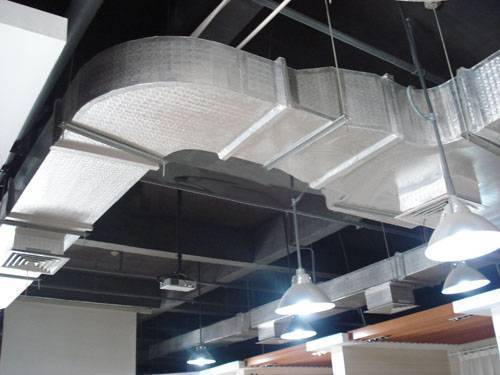
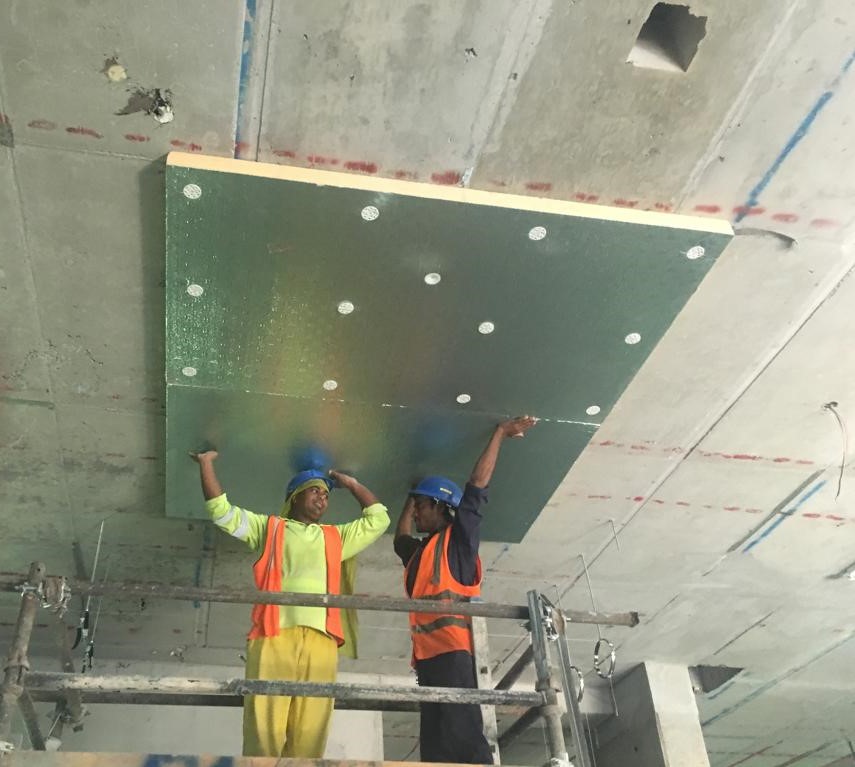
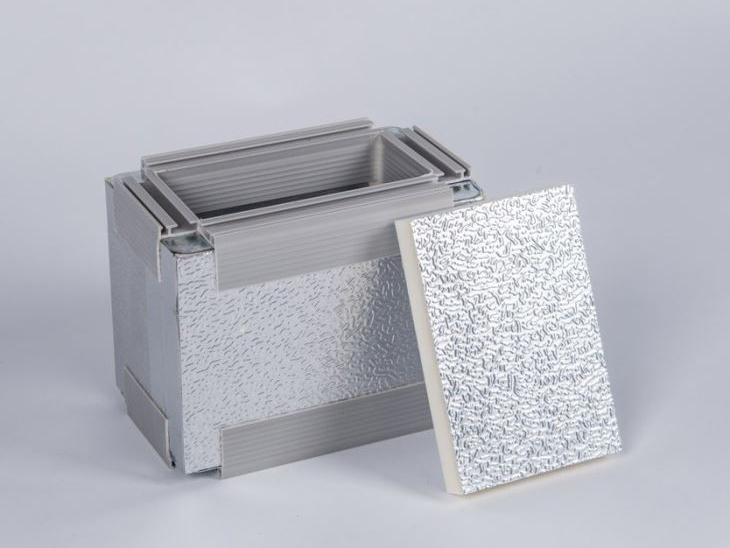
Pre- Insulated panels made of an insulating component with alternative new generation blowing agents that eliminates the use of CFC, HCFC & HFC in rigid PIR foam with facings of Aluminum Foil of 80 micron on both side.
UTILISATION:
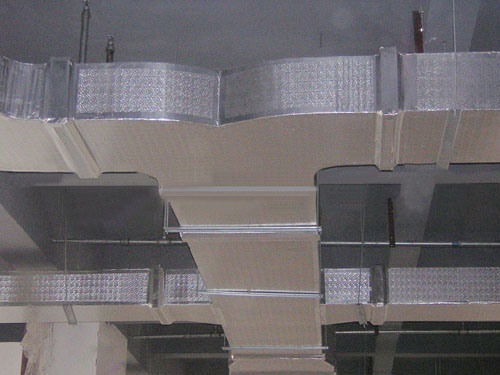
Pre-Insulated air duct system specially designed to be used in Hotels, Malls, Offices, Residential buildings, Supermarkets, Theaters, Airports, Industries, healthcare facilities, food processing industries, schools, pharmaceutical factories, and clean rooms.
APPLICATIONS:
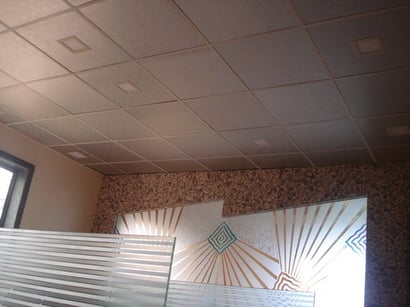
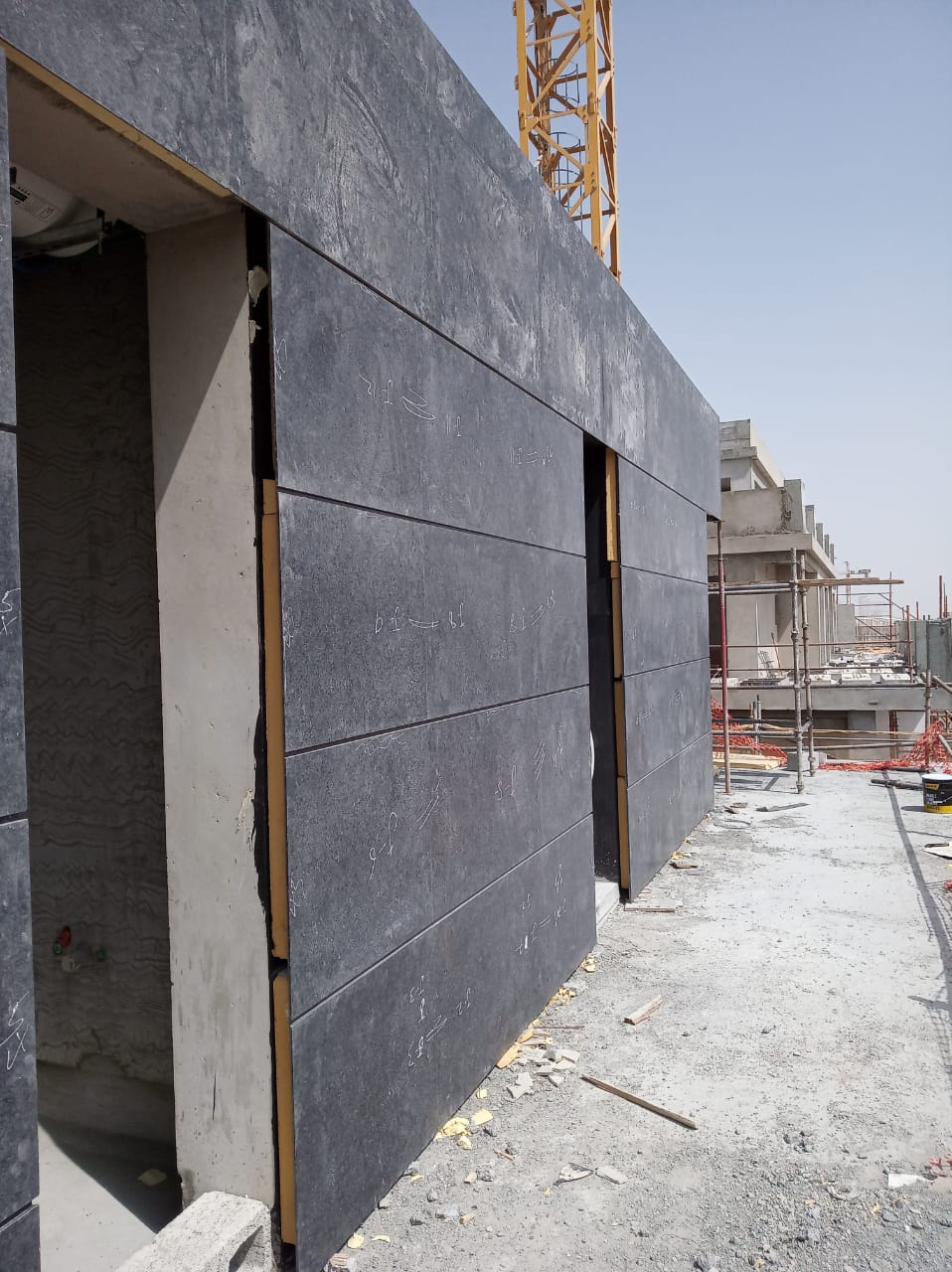
HVAC ducting, Fall ceiling, Under-Deck, Over-Deck, Cavity Wall insulation
INSULATING MATERIAL CHARACTERISTICS
The PUR / PIR foam that makes up the core of the panel is the result of a chemical reaction between specifically formulated, high-quality fire-retardant polyols and isocyanates. The resultant insulating material is environmentally friendly & free of CFC, HCFC & HFC.
THERMAL INSULATION
Due to the high percentage of closed cells, exceeding 95%, the foam of the PIR panel has a thermal conductivity A of 0,021 W/ (m °K) and meets the requirement of BS 5422: 2009
Pre-insulated duct systems meet the requirement of EN13403. Water vapor permeance 0.00 perms as per ASTM E96.
PANEL CHARACTERISTICS
Utilization Temperature
Pre-Insulated Duct can be used in a temperature range from -30°C to +65°C in continuous operation.
CERTIFICATES & APPROVALS
Reaction to Fire, Smoke & Toxicity
Pre-Insulated panel have self-extinguishing properties, low fire propagation and no flaming droplets. These Panels meets the following for the reaction to Fire classifications.
CLASS O & CLASS 1 - AS per BS476 Part 6, Part 7 & Class O Summary Report
Euro Class- B, S2, d0 ratings as per BS EN13501-1 Class A ratings as per ASTM E84, UL 723, and NFPA 255
IMO resolutions MSC 307 (88) (2010-FTP Code) Annexure 1: Part 2 - For Toxicity
UK Defence standard 02-713: - UK Navel Engineering standard NES 713 toxic fume test. Certification of approval No CF 777 / CERTFIRE
UL GreenGuard Gold Certificate for Highest degree of Indoor Air.
| EASY+ Panel Thickness | 20.5 MM +/- 0,5 mm as per (UNI EN 823) |
| External Aluminum | 80 / 200 Micron Thick Embossed with Lacquer Coating |
| Internal Aluminum | 80 Micron Thick Embossed with Lacquer Coating |
| Thermal Conductivity | 0,021 W/ (m °K) Meets the requirement of BS 5422:2009 |
| EASY Duct system meets the requirement of EN13403 | |
| Density of Foam | 45kg +/- 3 kg/m3 |
| Insulation Material | PIR Which is HCFC & CFC Gases Free |
| Water Vapour Absorption | 0.03% by volume as per ASTM C209 |
| Water Vapour Permeance | 0.00 perms as per ASTM E96 |
| UV Resistance | Yes - as per Standard |
| Corrosion Resistance | Yes - ASTM B117 Norms |
| Closed Cell % | >95% |
| Class O & Class 1 - BS 476 Part 6 & 7 | |
| Fire Reaction | Class A - ASTM E84 / UL 723 |
| Class B - According to BS EN13501-1 | |
| Smoke & Toxicity | Toxic Index Below 5.5 as per British Navel Engineering Services NES713 |
| IMO Resolution MSC 307 (88) | |
| Cell Composition | Only Air & Co2 |
| Air Quality UL Greenguard Gold Certified | |