
Introduction
Modern HVAC (Heating, Ventilation, and Air Conditioning) systems require ductwork that is energy-efficient, lightweight, durable, and easy to install. Traditional galvanized iron (GI) ducts often require additional insulation, increasing installation time and operating costs. To overcome these challenges, many commercial and industrial projects now use PIR ducts.
PIR (Polyisocyanurate) ducts are pre-insulated duct systems designed to deliver conditioned air while minimizing heat gain or heat loss. Their superior thermal insulation, lightweight construction, and long service life make them an excellent choice for offices, hospitals, shopping malls, pharmaceutical plants, food processing units, clean rooms, and industrial facilities.
In this guide, you’ll learn what a PIR duct is, how it works, its benefits, applications, installation process, and why it has become the preferred solution for modern HVAC systems.
What Is a PIR Duct?
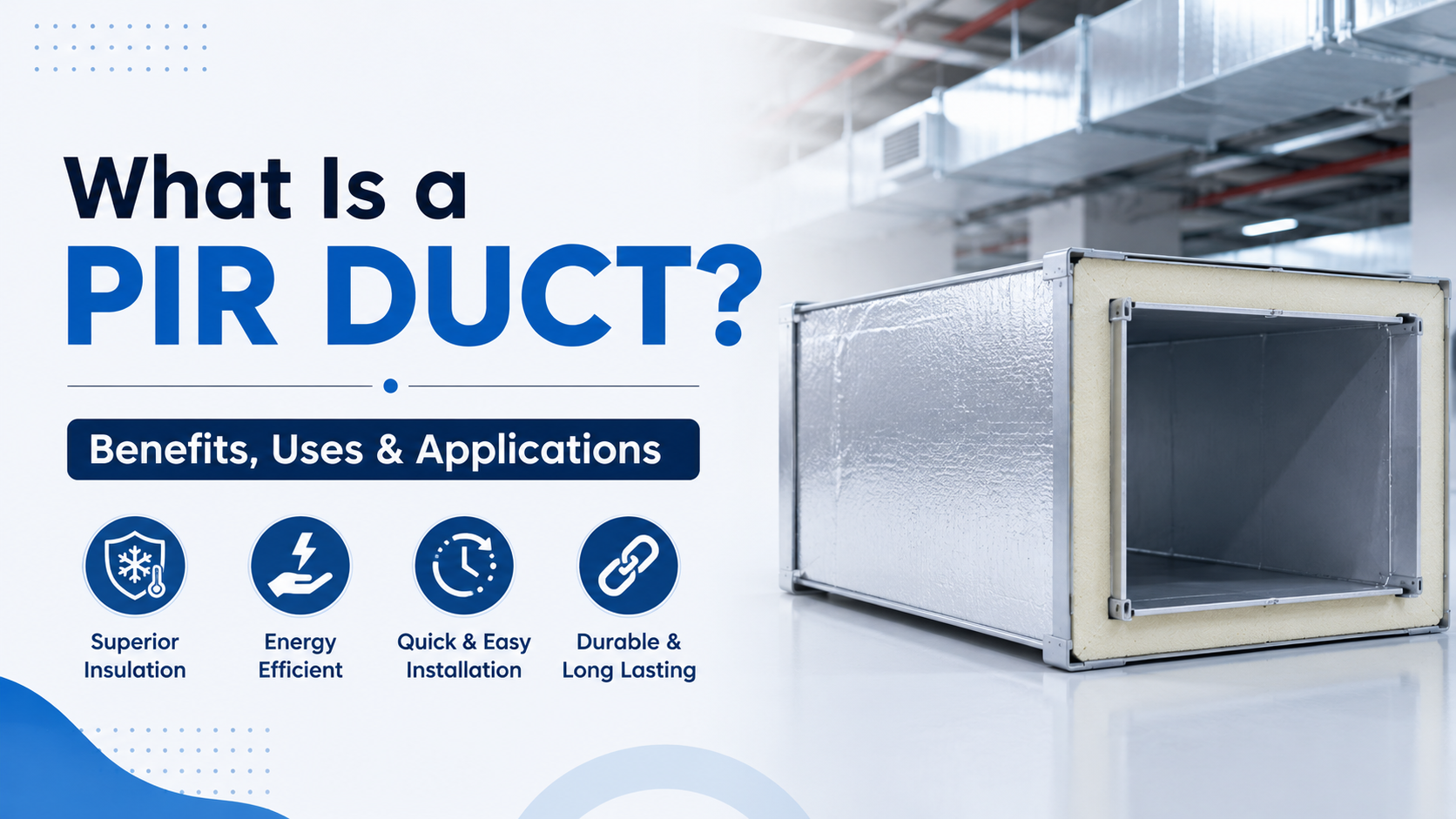
A PIR duct is a pre-insulated HVAC duct manufactured using rigid Polyisocyanurate (PIR) foam sandwiched between aluminum foil or other protective facings. Unlike conventional GI ducts that require separate insulation, PIR ducts combine structural strength and thermal insulation into a single panel.
This integrated design helps reduce energy loss, simplifies installation, and improves the overall efficiency of HVAC systems.
Components of a PIR Duct
A typical PIR duct consists of:
- High-density PIR foam core
- Reinforced aluminum foil facing
- Vapor barrier layer
- Protective coating
- Airtight joint system
These components work together to provide excellent thermal performance, moisture resistance, and durability.
How Does a PIR Duct Work?
A PIR duct transports conditioned air through an insulated pathway while minimizing heat transfer between the duct and the surrounding environment.
The rigid PIR foam has very low thermal conductivity, which reduces temperature loss as air travels through the duct system.
As a result:
- HVAC systems consume less energy.
- Air reaches its destination at the intended temperature.
- Cooling and heating performance improves.
- Indoor comfort remains consistent.
Key Features of PIR Ducts
- Excellent thermal insulation
- Lightweight construction
- High structural strength
- Low thermal conductivity
- Moisture-resistant design
- Corrosion resistance
- Quick installation
- Long service life
- Energy-efficient performance
- Smooth internal airflow
Top Benefits of PIR Ducts
1. Superior Thermal Insulation
One of the biggest advantages of PIR ducts is their outstanding insulation performance.
The PIR foam core minimizes heat transfer, helping HVAC systems maintain the desired air temperature throughout the duct network.
This improves system efficiency while reducing cooling and heating losses.
2. Significant Energy Savings
Energy efficiency is one of the main reasons engineers choose PIR ducts.
Because less conditioned air loses temperature during transportation, HVAC equipment operates more efficiently, reducing electricity consumption and operating costs.
3. Lightweight Design
Compared to conventional GI ducts, PIR ducts are much lighter.
Benefits include:
- Easier transportation
- Faster handling
- Reduced structural load
- Lower installation costs
4. Faster Installation
Traditional ducts require separate insulation after fabrication.
PIR ducts arrive as pre-insulated panels, reducing installation time and labor requirements.
Projects can often be completed more quickly, minimizing disruptions.
5. Reduced Air Leakage
Properly fabricated PIR ducts feature airtight joints that reduce air leakage.
Lower leakage helps:
- Improve HVAC efficiency
- Maintain airflow
- Reduce operating costs
- Increase indoor comfort
6. Moisture and Condensation Resistance
Condensation can damage HVAC systems and reduce insulation performance.
PIR ducts resist moisture and condensation, helping maintain long-term efficiency while reducing maintenance needs.
7. Corrosion Resistance
Unlike metal ducts that may corrode in humid environments, PIR ducts provide excellent resistance to corrosion, making them suitable for challenging industrial and commercial conditions.
8. Improved Indoor Air Quality
The smooth internal surface minimizes dust accumulation and helps maintain cleaner airflow, contributing to healthier indoor environments.
9. Long Service Life
With proper fabrication and installation, PIR ducts provide reliable performance for many years while requiring relatively little maintenance.
10. Cost-Effective HVAC Solution
Although the initial investment may differ from conventional duct systems, the long-term savings from reduced energy use, lower maintenance, and quicker installation often make PIR ducts a cost-effective choice.
Applications of PIR Ducts
PIR duct systems are widely used in:
Commercial Buildings
- Office complexes
- Shopping malls
- Hotels
- Educational institutions
Healthcare Facilities
- Hospitals
- Laboratories
- Clean rooms
- Pharmaceutical manufacturing plants
Industrial Facilities
- Food processing plants
- Cold storage facilities
- Manufacturing units
- Warehouses
- Electronics production
Residential Projects
- Luxury apartments
- Villas
- Premium residential developments
Why Are PIR Ducts Better for HVAC Systems?
PIR ducts help HVAC systems perform more efficiently by:
- Reducing thermal losses
- Improving airflow efficiency
- Lowering electricity consumption
- Maintaining consistent indoor temperatures
- Reducing maintenance requirements
- Extending HVAC system lifespan
Industries That Benefit from PIR Ducts
PIR duct systems are particularly valuable for:
- Pharmaceutical manufacturing
- Food and beverage processing
- Cold storage facilities
- Hotels and hospitality
- Commercial offices
- Hospitals
- Airports
- IT data centers
- Shopping malls
- Educational campuses
How to Choose the Right PIR Duct
Before selecting a PIR duct system, consider:
- Required air temperature
- Duct size and airflow
- Building application
- Fire performance requirements
- Insulation thickness
- Installation environment
- Compliance with local building standards
- Supplier experience and technical support
Common Questions About PIR Ducts
Are PIR ducts energy efficient?
Yes. Their low thermal conductivity helps reduce heat transfer, improving HVAC efficiency and lowering energy consumption.
Can PIR ducts replace GI ducts?
In many commercial and industrial HVAC applications, PIR ducts are used as an alternative to conventional GI ducts because they combine ductwork and insulation in a single system.
Are PIR ducts suitable for hospitals?
Yes. Their smooth internal surface, insulation performance, and resistance to condensation make them suitable for healthcare environments when specified appropriately.
How long do PIR ducts last?
With proper installation, regular inspection, and routine maintenance, PIR duct systems can provide reliable performance for many years.
Do PIR ducts reduce electricity bills?
Yes. By minimizing thermal losses and helping HVAC equipment operate more efficiently, PIR ducts can contribute to lower energy costs.
Why Choose Pararth Products Pvt. Ltd.?
Pararth Products Pvt. Ltd. supplies high-quality insulation and HVAC solutions for commercial and industrial projects across Ahmedabad, Gujarat, Mumbai, Pune, Hyderabad, Telangana, Indore, Goa, and other regions of India.
Our product portfolio includes:
- PIR Duct Systems
- PUF Panels
- Rockwool Insulation
- Glass Wool Insulation
- Nitrile Rubber Insulation
- XLPE Insulation
- Air Bubble Insulation
- Polycarbonate Roofing Sheets
- Roof and Under-Deck Insulation Solutions
Our team works closely with contractors, consultants, architects, and facility managers to recommend insulation solutions that improve energy efficiency and long-term performance.
Frequently Asked Questions
What does PIR stand for?
PIR stands for Polyisocyanurate, a high-performance rigid insulation material widely used in pre-insulated HVAC duct systems.
What is the difference between PIR and PUF ducts?
Both offer thermal insulation, but PIR generally provides improved fire performance and can withstand higher temperatures, making it a preferred choice for many commercial applications.
Are PIR ducts suitable for commercial buildings?
Yes. They are commonly installed in offices, malls, hospitals, hotels, airports, and industrial facilities.
Can PIR ducts reduce HVAC operating costs?
Yes. Better insulation helps reduce thermal losses, improving system efficiency and lowering energy consumption.
Are PIR ducts easy to install?
Yes. Because they are pre-insulated, they typically require less installation time compared to traditional duct systems with separate insulation.
Conclusion
PIR ducts have become one of the most efficient solutions for modern HVAC systems by combining air distribution and thermal insulation into a single lightweight, high-performance product. Their ability to improve energy efficiency, reduce installation time, minimize maintenance, and maintain consistent indoor temperatures makes them an excellent choice for commercial, industrial, and institutional buildings.
Whether you’re designing a new HVAC system or upgrading an existing one, choosing a high-quality PIR duct system can contribute to lower operating costs, improved comfort, and reliable long-term performance. Working with an experienced insulation supplier ensures you receive the right specifications and technical guidance for your project’s unique requirements.