
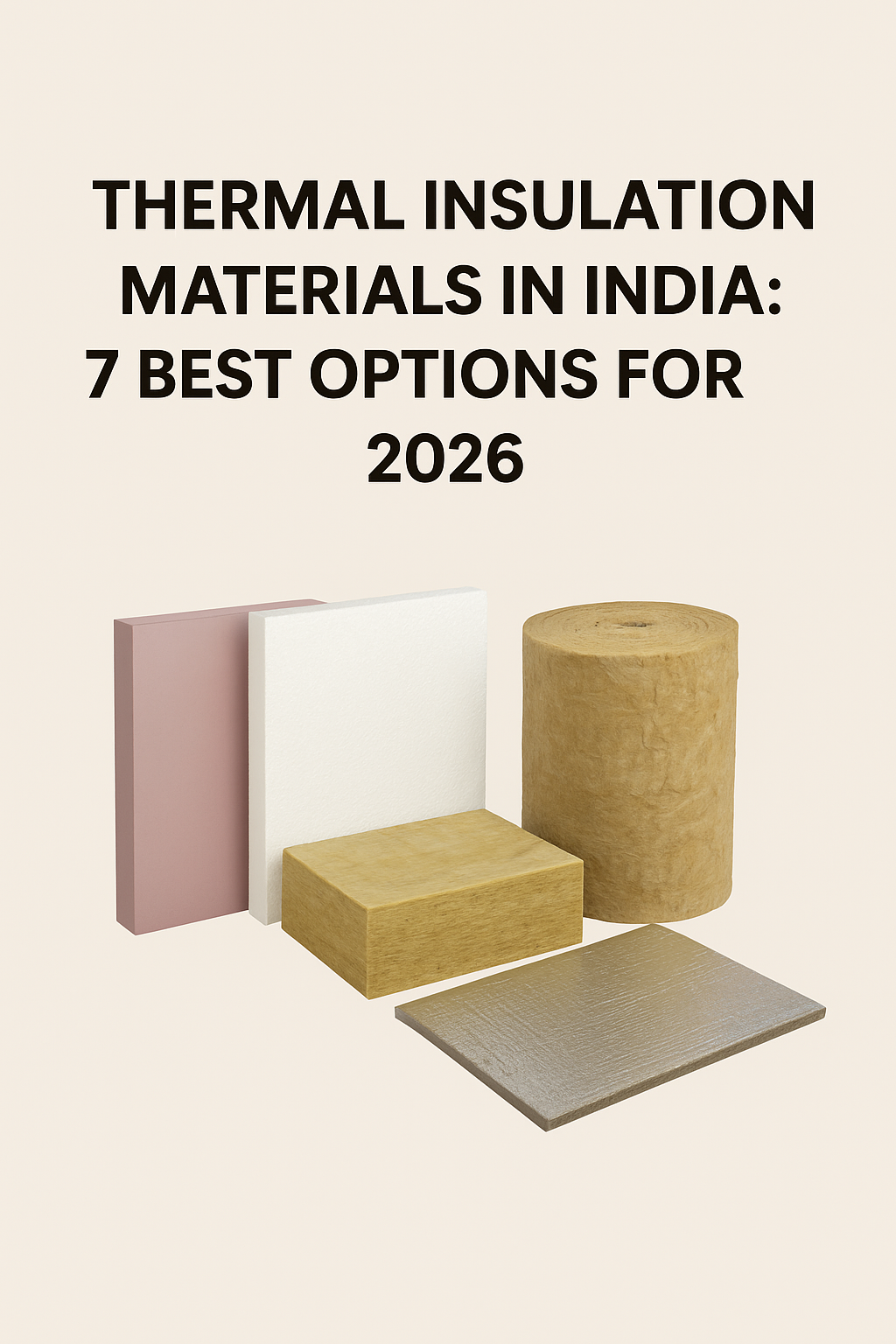
Thermal insulation materials in India are becoming essential as industries, factories, warehouses, and commercial spaces move toward energy-efficient construction. With rising electricity costs and increasing demand for controlled environments, choosing the right insulation is crucial in 2026. The right insulation material helps reduce energy bills, improve temperature stability, enhance indoor comfort, and improve building durability.
This comprehensive guide covers the 7 best thermal insulation materials in India, their uses, benefits, and how to select the right solution for your project.
1.PUF Panels – Best Thermal Insulation Materials in India
PUF panels (Polyurethane Foam Panels) are among the most preferred thermal insulation materials in India due to their exceptional thermal performance, lightweight structure, and strength. They consist of a high-density PU foam core placed between metal sheets, offering superior insulation.
Why PUF Panels Stand Out
- Lowest thermal conductivity among common insulation materials
- Excellent temperature retention for cold rooms and hot areas
- Strong, durable, and corrosion-resistant
- Fast, modular installation
- Available in fire-retardant grades
- Low maintenance and long service life
Common Applications
- Cold storage units
- Food processing plants
- Pharmaceutical facilities
- Warehouses and industrial sheds
- Clean rooms
- Prefabricated buildings
PUF panels continue to dominate the list of top thermal insulation materials in India due to their superior energy-saving capabilities.
2. Rockwool Insulation
Rockwool, also called mineral wool, is widely used in high-temperature and fire-prone areas. It is one of the most reliable thermal insulation materials in India for industrial applications.
Benefits
- High fire resistance
- Excellent acoustic performance
- Water-repellent and mold-resistant
- Ideal for high-temperature environments
Applications
- Industrial process applications
- Boilers and furnaces
- Fire-rated partitions
- Soundproof rooms
3. EPS Panels (Expanded Polystyrene)
EPS is one of the most economical thermal insulation materials in India, widely used in lightweight construction.
Advantages
- Affordable and lightweight
- Easy to handle and install
- Good insulation for moderate climates
- Moisture-resistant
Common Uses
- Prefabricated structures
- Portable cabins
- Wall partitions
- Budget-friendly projects
4. XPS Insulation (Extruded Polystyrene)
Among the top Thermal Insulation Materials in India, XPS insulation is widely used in areas where high compressive strength is essential especially for under-floor insulation, basement flooring, parking decks, and moisture-prone construction zones.
Why XPS Is Popular
- Excellent load-bearing capacity
- High moisture resistance
- Long lifespan
- Suitable for underground and roof applications
Applications
- Under-floor insulation
- Parking structures
- Industrial roofs
- Basement walls
5. Glass Wool Insulation
Glass wool is one of the most widely used thermal insulation materials in India, especially in HVAC projects and commercial buildings.
Key Benefits
- Lightweight and easy to install
- Great for soundproofing
- Fire-resistant
- Cost-effective
Applications
- Auditoriums and malls
- HVAC duct insulation
- Ceilings and attics
- Commercial buildings
6. PIR Panels (Polyisocyanurate Panels)
PIR is an upgraded version of PUF insulation and is one of the safest thermal insulation materials in India where fire protection is crucial.
Advantages
- Higher fire resistance than PUF
- Better insulation performance
- Lower smoke emission
- High durability
Where Used
- Pharma clean rooms
- Refrigerated warehouses
- Fire-rated walls
- High-safety industrial sites
7. Reflective Foil Insulation
Among the most efficient Thermal Insulation Materials in India, reflective insulation works by reflecting radiant heat, making it highly effective for buildings located in hot and humid climates across the country.
Benefits
- Affordable
- Effective heat reflection
- Quick installation
- Often used with other insulation materials
Applications
- Industrial roofing
- Attics
- Metal buildings
- Warehouses
How to Choose the Best Thermal Insulation Materials in India
When selecting the right insulation material, consider the following:
1. Temperature Requirements (Most Important Factor)
The first step is understanding the temperature range your facility needs to maintain.
For Very Cold Conditions (Cold Rooms, Frozen Storage, Ice Plants):
- PUF Panels → Best thermal resistance, low thermal conductivity
- PIR Panels → Better fire performance with similar insulation value
For Very Hot Conditions (Boilers, Furnaces, High-Heat Industries):
- Rockwool (Mineral Wool) → Can withstand extremely high temperatures, up to 750°C
- Ideal for industrial plants, steel industries, power plants, and hot pipelines
Tip:
For temperature-sensitive industrial environments, always choose insulation with stable performance under fluctuating conditions.
2. Fire Safety Requirements
Fire safety is a top priority in industries such as pharmaceuticals, food processing, chemical plants, and large warehouses.
Best Fire-Safe Options:
- PIR Panels → Low smoke emission + self-extinguishing
- Rockwool → Completely fire-resistant and non-combustible
- Glass Wool → Good fire resistance for commercial buildings
Tip:
If your facility needs fire-rated walls or ceilings, avoid EPS and reflective foil.
3. Moisture & Humidity Exposure
High moisture can cause rust, fungus, and insulation failure. Choose moisture-resistant materials if your environment is humid.
Best for Moisture-Prone Areas:
- PUF Panels → Closed-cell structure with <2% water absorption
- PIR Panels → Great for cold storage + food industry
- XPS Sheets → Best for underground or wet environments (basements, floors)
Tip:
Moisture-resistant insulation is essential for maintaining temperature stability and preventing long-term damage.
4. Budget Constraints
Budget often influences insulation choices, especially for large projects.
Affordable Options:
- EPS Panels → Cheapest option for prefab structures
- Reflective Foil → Low-cost basic insulation for roofs and attics
Mid-Range Options:
- Glass Wool → Ideal for commercial ceilings and HVAC ducts
Premium Options:
- PUF & PIR Panels → High performance and long-term ROI
Tip:
PUF might cost more initially, but its energy savings often recover the investment quickly.
5. Speed of Installation
Fast installation saves time and reduces labor cost especially important for factories and warehouses.
Fastest Installation Materials:
- PUF Panels → Prefabricated with interlocking joints
- PIR Panels → Ready-to-install modular panels
These materials reduce construction time by up to 60%, helping industrial units start operations faster.
6. Purpose & Industry Type
Different industries require different insulation materials based on operational needs.
Industrial Buildings (Factories, Warehouses):
- PUF Panels → Best overall insulation
- PIR Panels → Suitable for fire-sensitive industries
Commercial Buildings (Offices, Malls, Auditoriums):
- Glass Wool → Popular for ceilings and acoustic insulation
- Rockwool → Great for fire-rated commercial partitions
Prefab Structures / Portable Cabins:
- EPS Panels → Lightweight, economical, and easy to install
7. Energy Efficiency Needs
If energy savings and long-term ROI are key goals:
Best for Energy Efficiency:
- PUF Panels → Lowest thermal conductivity
- PIR Panels → Slightly better energy retention with fire safety
- XPS Sheets → Great for building envelopes and roofs
Tip:
Higher insulation efficiency = lower power bills for the next 10–20 years.
8. Expected Lifespan & Maintenance
Choosing a durable insulation material reduces maintenance costs.
Longest Lasting Materials:
- PUF/PIR Panels → 25–30 year lifespan
- Rockwool → Extremely durable and fire-safe
- XPS → Long-lasting in wet or underground areas
9. Environmental & Sustainability Considerations
Businesses are now shifting toward eco-friendly construction.
Best Eco-Friendly Insulation:
- PUF Panels → Reduce energy waste significantly
- Rockwool → Recyclable and made from natural stone
- Glass Wool → Environment-friendly and low carbon footprint
Why PUF Panels Are the No.1 Thermal Insulation Materials in India (2026)
Among all the options, PUF panels provide the best overall value because they offer:
- Highest insulation efficiency
- Maximum energy savings
- Fastest installation
- Strong structural reliability
- Best long-term ROI
- Ideal for both hot and cold environments
This is why they remain the top choice across Indian industries.
Why Choose Pararth Products for PUF Panels in India?
Pararth Products manufactures premium-quality PUF panels designed for industrial and commercial applications. Our panels offer:
✔ High-density PU core
✔ Superior thermal insulation
✔ Strong metal facings
✔ Custom sizes and thicknesses
✔ Moisture-resistant and fire-retardant options
✔ Precision interlocking joints
✔ Long-lasting durability
Our products help businesses reduce energy expenses, improve temperature stability, and build stronger, more efficient spaces.
Final Thoughts
Choosing the right thermal insulation materials in India is essential for improving energy efficiency, reducing operating costs, and enhancing building performance. With the growing demand for insulated structures in 2026, materials like PUF panels, PIR panels, rockwool, glass wool, EPS, XPS, and reflective foil are becoming indispensable.
For tailored insulation solutions, Pararth Products provides industry-leading PUF panels designed for performance, durability, and energy savings.