
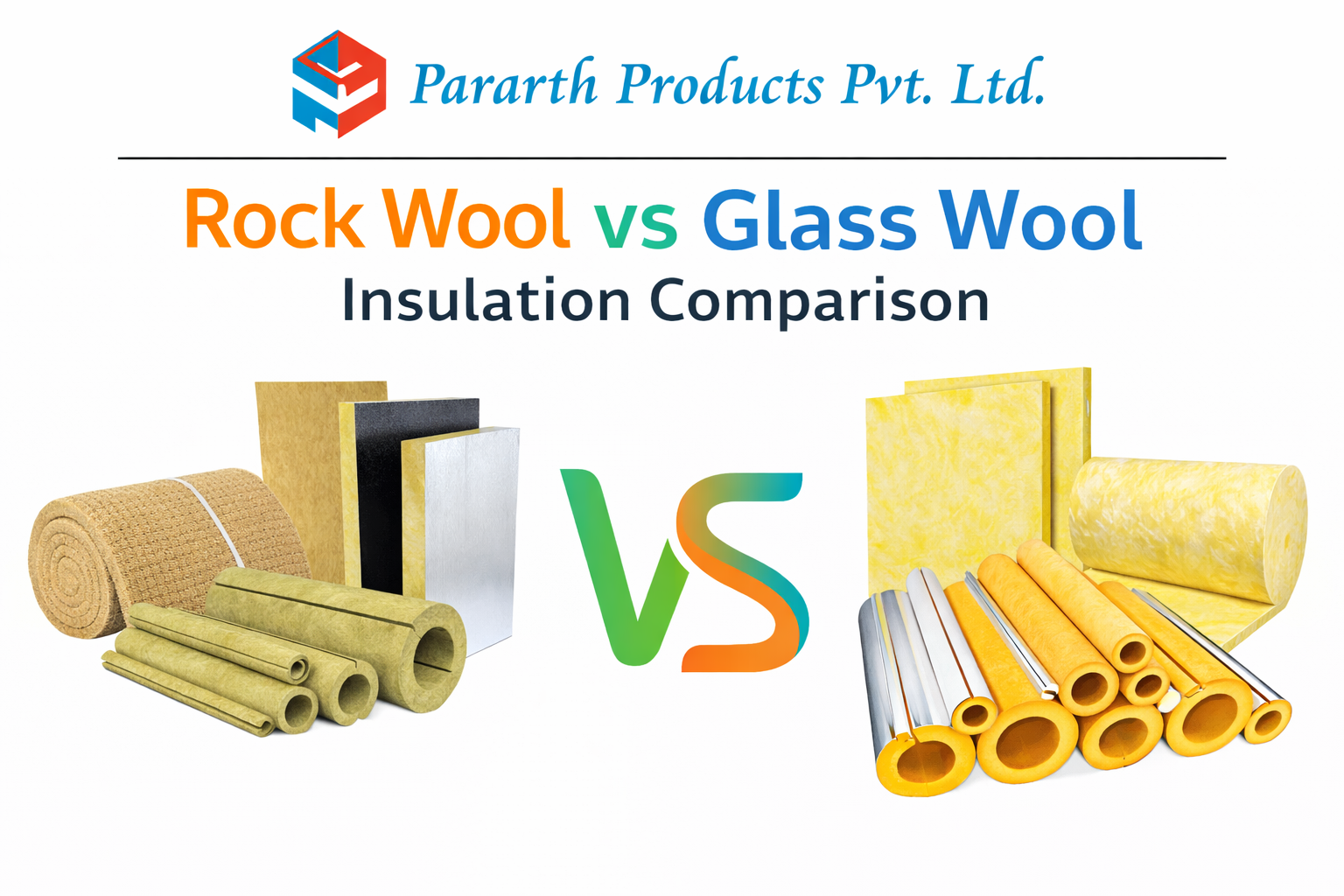
In industrial plants and HVAC systems, insulation is not just about comfort. It is about energy efficiency, fire safety, noise control, and long-term reliability. Among the many insulation materials available today, Glasswool and Rockwool remain the most widely used across industrial and HVAC applications.
While both materials serve similar purposes, their performance characteristics, safety ratings, and suitability for specific environments differ significantly. Understanding these differences is essential for selecting the right insulation solution for your project.
This blog provides a detailed comparison of Glasswool vs Rockwool insulation to help you make an informed decision for industrial and HVAC use.
Understanding Insulation Requirements in Industrial & HVAC Systems
Industrial facilities and HVAC networks operate under demanding conditions. Insulation materials must:
- Reduce heat loss and energy consumption
- Control noise and vibration
- Meet fire safety regulations
- Withstand temperature fluctuations and moisture
- Deliver long service life with minimal maintenance
Glasswool and Rockwool both address these needs, but in different ways.
What Is Glasswool Insulation?
Glasswool insulation is made from recycled glass fibers, melted and spun into a lightweight, wool-like structure. The fibers trap air pockets, which slow down heat transfer and absorb sound waves.
Because of its lightweight and flexible nature, Glasswool is widely used in HVAC systems and commercial buildings.
Key Features of Glasswool Insulation
- Lightweight and easy to install
- Good thermal insulation for moderate temperatures
- Effective sound absorption
- Cost-efficient for large surface areas
Common Industrial & HVAC Applications
- HVAC duct insulation
- Chillers and air handling units
- Commercial buildings
- Light industrial facilities
What Is Rockwool Insulation?
Rockwool insulation is manufactured from natural volcanic rock and minerals that are melted at very high temperatures and spun into dense fibers. This structure gives Rockwool its strength, fire resistance, and acoustic performance.
Rockwool is engineered for high-temperature and safety-critical environments, making it ideal for heavy industrial use.
Key Features of Rockwool Insulation
- Non-combustible and fire-resistant
- Withstands extremely high temperatures
- Superior acoustic insulation
- High mechanical strength and durability
Common Industrial & HVAC Applications
- Power plants and refineries
- Boilers, furnaces, and reactors
- Fire-rated walls and ceilings
- High-noise mechanical rooms
Fire Resistance and Safety Performance
Fire safety is a decisive factor in industrial insulation selection.
Rockwool insulation is non-combustible and can withstand temperatures above 1000°C. It does not contribute to flame spread or emit toxic smoke, making it suitable for fire-rated systems and hazardous zones.
Glasswool insulation offers moderate fire resistance but is not recommended for areas exposed to extreme heat or high fire risk.
Best Choice for Fire Safety:
Rockwool insulation is the preferred option for industrial plants, power stations, and fire-sensitive installations.
Thermal Insulation Performance
Both materials provide effective thermal insulation, but their performance varies by operating conditions.
- Glasswool performs efficiently in HVAC systems and environments with controlled temperatures.
- Rockwool maintains thermal stability even under continuous high-temperature exposure.
Industrial Insight:
For heavy industrial processes and high-temperature equipment, Rockwool delivers superior thermal reliability.
Acoustic Performance and Noise Control
Noise control is critical in industrial facilities and HVAC installations.
- Glasswool insulation provides good sound absorption for ducts, offices, and light industrial zones.
- Rockwool insulation, due to its higher density, offers superior noise reduction in high-decibel environments.
Best Choice for Noise Control:
Rockwool insulation is more effective for factories, power plants, and mechanical rooms.
Moisture Resistance and Durability
Moisture can reduce insulation performance if not properly managed.
- Glasswool may absorb moisture if vapor barriers are not installed correctly, potentially affecting long-term efficiency.
- Rockwool is naturally water-resistant and retains its shape, strength, and insulation value even in humid conditions.
Durability Winner:
Rockwool insulation offers longer service life and better resistance to harsh industrial environments.
Glasswool vs Rockwool: Industrial & HVAC Comparison Table
| Factor | Glasswool | Rockwool |
|---|---|---|
| Fire Resistance | Moderate | Excellent (Non-combustible) |
| Thermal Stability | Moderate temperatures | High temperatures |
| Acoustic Performance | Good | Excellent |
| Moisture Resistance | Moderate | High |
| Weight | Lightweight | Dense |
| Installation | Easy and fast | Requires skilled handling |
| Cost | Lower | Higher |
| Lifespan | Moderate | Long-lasting |
Environmental and Sustainability Considerations
- Glasswool insulation is manufactured using a high percentage of recycled glass.
- Rockwool insulation is produced from natural, abundant raw materials and is fully recyclable.
Both materials contribute to sustainable and energy-efficient building practices when installed correctly.
Which Insulation Is Best for Your Application?
Choose Glasswool Insulation If:
- The project involves HVAC systems or commercial buildings
- Budget efficiency is a priority
- Operating temperatures are moderate
Choose Rockwool Insulation If:
- Fire safety is a critical requirement
- High-temperature processes are involved
- Long-term durability and performance are essential
Frequently Asked Questions
Is Glasswool suitable for industrial applications?
Yes, Glasswool is suitable for light industrial and HVAC applications where temperature and fire risk are moderate.
Which insulation is better for fire protection?
Rockwool insulation provides superior fire resistance and is non-combustible.
Which material offers better sound insulation?
Rockwool performs better in high-noise industrial environments.
Need Expert Advice on Industrial & HVAC Insulation?
Selecting the right insulation material depends on application conditions, safety standards, and performance expectations.
Pararth Products offers expert technical support and high-quality insulation solutions tailored for industrial and HVAC projects.