
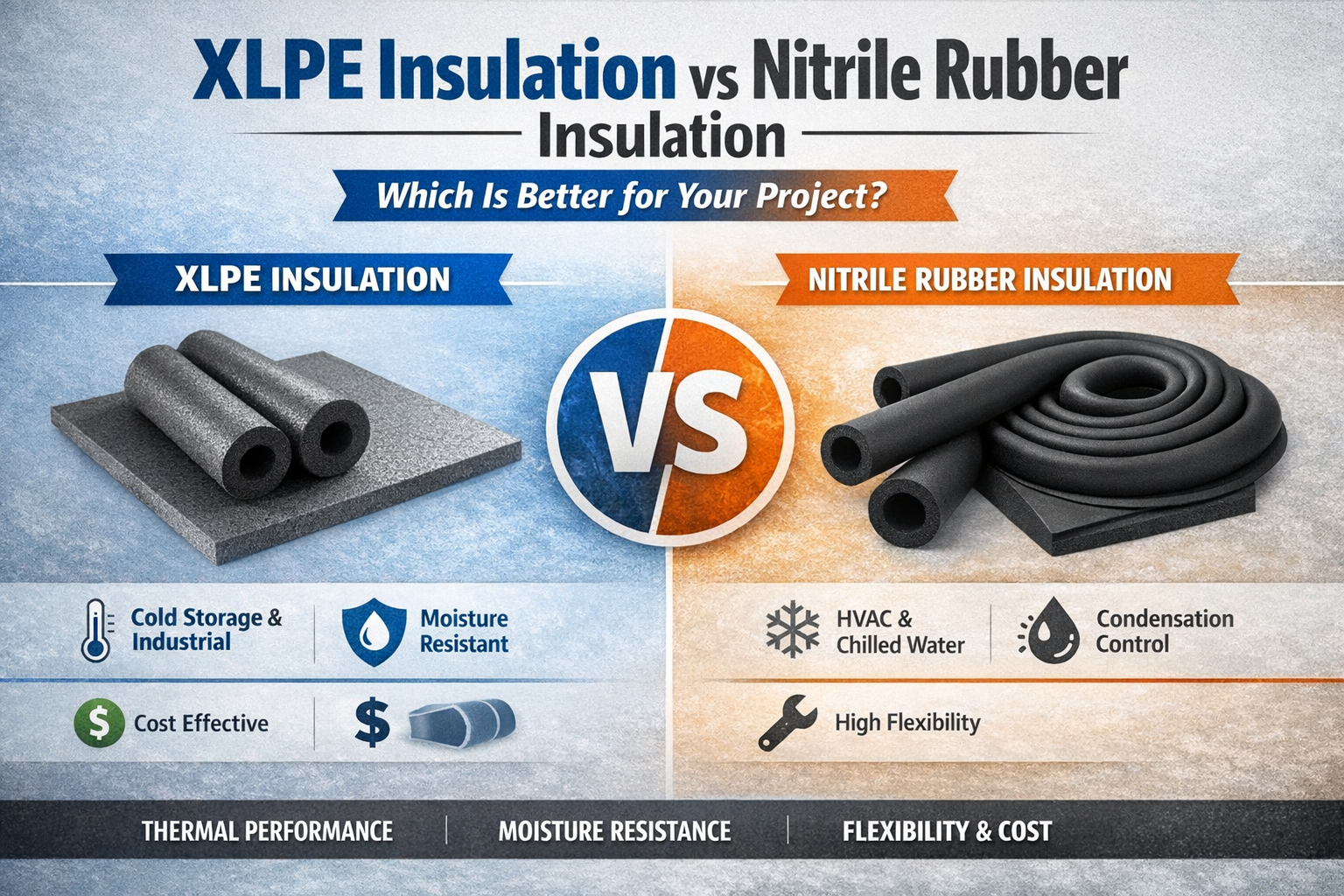
Choosing the right insulation material is not a small technical checkbox. It is a long term decision that affects energy efficiency, condensation control, operating costs, and overall system reliability. When comparing XLPE Insulation vs Nitrile Rubber Insulation, engineers and contractors often face a common question:
Which one is better for my project?
The answer depends on application type, temperature range, moisture exposure, installation conditions, and budget. Both materials are high-performance solutions, but they shine in different environments.
This complete guide breaks down performance, cost, applications, durability, and technical differences to help you make the right choice.
Understanding the Basics: XLPE vs Nitrile Rubber
Before comparing performance, let’s understand what each material actually is.
What is XLPE Insulation?
XLPE Insulation is a closed cell foam created through a cross linking process that strengthens the molecular structure of polyethylene. This process enhances:
- Thermal stability
- Mechanical strength
- Moisture resistance
- Chemical resistance
XLPE insulation is widely used in:
- Cold storage insulation
- Industrial insulation
- HVAC duct insulation
- Roof and wall insulation
- Large surface thermal applications
It is lightweight, semi rigid, and highly effective for large area coverage.
What is Nitrile Rubber Insulation?
Nitrile Rubber Insulation is an elastomeric closed cell foam material designed primarily for HVAC and refrigeration systems. It is flexible, durable, and engineered specifically for condensation control.
Nitrile rubber insulation is commonly used in:
- HVAC piping systems
- Refrigeration lines
- Chilled water systems
- Air conditioning units
- Plumbing insulation
Its flexibility allows it to wrap tightly around pipes and fittings, preventing air gaps and condensation.
Thermal Performance Comparison
Thermal resistance is the core function of any insulation material. Both XLPE and nitrile rubber perform well, but they serve slightly different thermal environments.
XLPE Thermal Performance
XLPE insulation provides:
- Stable thermal conductivity
- Uniform insulation across flat and large surfaces
- Effective performance in cold storage and industrial settings
Because of its closed cell structure, XLPE minimizes heat transfer and performs consistently in controlled temperature environments.
It is particularly effective in:
- Industrial buildings
- Cold storage warehouses
- Large HVAC duct systems
Nitrile Rubber Thermal Performance
Nitrile rubber insulation is designed for:
- Low temperature applications
- Chilled water pipelines
- Refrigeration systems
It maintains flexibility even in low temperatures, which prevents cracking and maintains thermal sealing. This is especially important in HVAC systems where temperature fluctuations occur frequently.
Thermal Performance Verdict
For large area insulation such as ducts and panels, XLPE insulation is highly effective.
For low temperature pipe insulation and HVAC systems, Nitrile Rubber insulation performs better due to its flexibility and sealing capability.
Moisture Resistance & Condensation Control
This is where the difference becomes more pronounced.
XLPE Moisture Resistance
XLPE insulation has a closed cell structure that:
- Reduces water absorption
- Prevents moisture penetration
- Maintains structural stability
It works well in environments where humidity is controlled. However, in high condensation risk areas like chilled pipes, additional vapor barriers may sometimes be required.
Nitrile Rubber Vapor Barrier Performance
Nitrile rubber insulation is specifically engineered for condensation control. It offers:
- Very low water vapor permeability
- Excellent vapor barrier properties
- Strong resistance to condensation formation
In HVAC piping, condensation can lead to corrosion, mold growth, and insulation failure. Nitrile rubber acts as a built in vapor barrier, reducing these risks significantly.
Moisture Control Verdict
For moisture sensitive HVAC systems, Nitrile Rubber Insulation is the superior option.
For general industrial insulation and cold storage, XLPE insulation performs reliably.
Flexibility and Installation
Installation complexity affects both labor costs and long term performance.
| Feature | XLPE Insulation | Nitrile Rubber Insulation |
|---|---|---|
| Flexibility | Moderate | High |
| Best Surface | Flat ducts & panels | Pipes & curved fittings |
| Installation Speed | Fast for large areas | Fast for piping systems |
| Maintenance | Low | Very Low |
XLPE Installation
XLPE is easy to install on:
- Flat surfaces
- Duct panels
- Wall and roof insulation
It is often available in sheets and rolls, making it cost-effective for large industrial projects.
Nitrile Rubber Installation
Nitrile rubber is ideal for:
- Complex piping networks
- Curves and fittings
- Valves and joints
Its elasticity allows it to form tight seals around pipes, preventing air gaps and condensation.
Cost Comparison
Budget planning plays a critical role in insulation selection.
XLPE Insulation Cost
- Lower material cost per square meter
- More economical for large scale projects
- Ideal for industrial and warehouse insulation
XLPE is typically more affordable for big surface areas.
Nitrile Rubber Insulation Cost
- Higher initial material cost
- Lower maintenance costs over time
- Energy savings in HVAC systems
Although nitrile rubber may cost more upfront, it often reduces long term operational expenses due to superior condensation control.
Cost Verdict
If your project involves large area insulation, XLPE is more economical.
If your project involves HVAC piping and moisture control, Nitrile Rubber offers better long term value.
Lifespan and Durability
Both materials are durable when properly installed.
XLPE Durability
- Resistant to chemicals
- Stable in industrial environments
- Long service life in controlled conditions
Nitrile Rubber Durability
- High resistance to moisture damage
- Flexible under temperature changes
- Strong performance in HVAC systems
In high humidity or chilled systems, nitrile rubber often maintains performance longer.
Application Based Comparison
Best Uses for XLPE Insulation
- Cold storage insulation
- Industrial building insulation
- HVAC duct insulation
- Large surface thermal protection
XLPE is excellent when covering broad areas efficiently.
Best Uses for Nitrile Rubber Insulation
- HVAC piping
- Refrigeration lines
- Chilled water systems
- Plumbing insulation
Nitrile rubber is specifically designed for pipe insulation where condensation prevention is critical.
Energy Efficiency Impact
Insulation is not just about temperature. It directly affects energy consumption.
XLPE and Energy Efficiency
XLPE reduces heat gain and heat loss in:
- Cold storage facilities
- Warehouses
- Industrial processing units
This leads to stable internal temperatures and reduced energy usage.
Nitrile Rubber and Energy Efficiency
Nitrile rubber reduces energy waste in:
- Chilled water systems
- Air conditioning units
- Refrigeration lines
By preventing condensation and thermal bridging, it keeps systems operating efficiently.
Environmental and Safety Considerations
Both XLPE and nitrile rubber insulation materials are available in flame-retardant grades and can comply with safety standards when sourced from certified manufacturers.
When selecting insulation, always verify:
- Fire rating compliance
- Thermal conductivity certification
- Vapor permeability ratings
- Local building code standards
Which Insulation Is Better for Your Project?
There is no universal winner. The right insulation depends on your specific application.
Choose XLPE Insulation if:
- You are insulating large industrial areas
- You need cost effective large surface coverage
- The project involves cold storage or duct insulation
Choose Nitrile Rubber Insulation if:
- You are insulating HVAC piping
- Condensation control is critical
- The system operates at low temperatures
Think of XLPE as the efficient coverage expert for wide surfaces, and nitrile rubber as the precision specialist for piping systems.
Frequently Asked Questions
Which insulation is better for HVAC systems?
Nitrile Rubber Insulation is preferred for HVAC piping due to its flexibility and vapor resistance.
Which insulation is more economical?
XLPE insulation is more economical for large industrial and cold storage applications.
Can XLPE be used for pipes?
Yes, but nitrile rubber performs better for curved piping systems and condensation control.
Which insulation lasts longer?
Both materials offer long lifespan when installed correctly. Nitrile rubber often performs better in high-moisture environments.
Final Conclusion
When comparing XLPE Insulation vs Nitrile Rubber Insulation, the decision should be based on application, environment, and budget.
- For large surface insulation and industrial cold storage, XLPE is efficient and cost effective.
- For HVAC piping and condensation sensitive systems, nitrile rubber delivers superior protection and long term performance.
The best insulation choice is not about which material is stronger overall. It is about which material is stronger for your specific project.